
Bethlehem Live Weather Camera sponsored by St. Luke's University Health Network
-
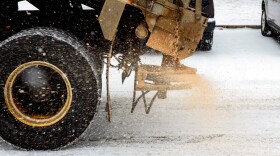
 Excessive road salting during the winter months can negatively impact the environment and local infrastructure. A nonprofit is working to collect salinity data from waterways.
 -
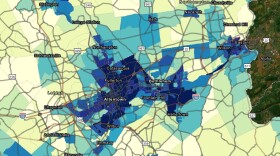
PennEnvironment launched an interactive map of efficient and renewable energy projects across the state. Here are the Lehigh Valley projects included.
-
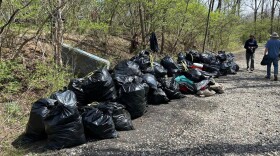
Almost 100 volunteers on Saturday picked up litter at Monocacy Creek. Organizers said there was "lots of camaraderie” and enthusiasm.
-
The Allentown Environmental Advisory Council is examining three of the city's largest buildings to identify potential opportunities to boost efficiency and cut costs.
-
Lehigh Valley residents eager to begin their spring gardening are looking toward the last frost and freeze dates for the area — but they'll have to be patient.
-
Ruth Santiago, an attorney and environmental activist in Puerto Rico, is returning to the Lehigh Valley this month to speak to students and residents about alternative electrical systems and environmental equity amid climate change.
-
Take a look at stories throughout the week of which we are most proud, had a profound impact on readers or that you might want to look at again.
-
The commonwealth is getting $265.9 million in federal funding to upgrade its aging water infrastructure. The state has the fourth most lead pipes in the nation, according to a recent EPA survey.
-
The spring migration count at Hawk Mountain has begun. So far this season, 137 birds of prey have been recorded.
-
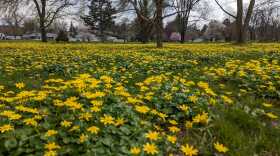
Allentown’s Cedar Creek Park was covered Thursday in lesser celandine, a low-growing, mat-forming flower that’s been flagged by the Department of Conservation and Natural Resources.





-
The coldest air of the season thus far is arriving in the Lehigh Valley, with forecasters touting conditions favorable for snow showers and squalls this afternoon.
-
Starting this month, and running on select Thursdays through March, this year’s series includes officials from state and local agencies, as well as nonprofits. It's free for members and costs $5 for non-members.
-
Brad Klein reviews the week’s astronomical highlights with Bethlehem’s 'Backyard Astronomy Guy," Marty McGuire.
-
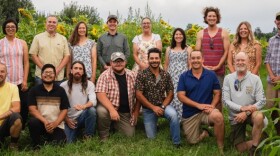
Less than a decade old and with trainees coming from all over the country, Rodale Institute’s Veteran Farmer Training program aims to give veterans the tools they need to pivot into successful farming careers, as well as spread knowledge about sustainable farming practices and regenerative organic agriculture.
-
Take a look at stories that ran throughout the week of which we are most proud, had a profound impact on readers or that you might want to look at again.
-
Two professors were recently awarded a three-year, $750,000 grant from NASA to help engage and retain women in STEM, or science, technology, engineering and math, disciplines. The college was one of seven institutions to get funding.
-
Hunters Sharing the Harvest, Pennsylvania’s venison donation program, has since 1991 built a network of deer processors and food pantries across the state, donating nearly 2 million pounds of venison. Deer rifle season begins Saturday.
-
Widespread heavy rains moved out of the Lehigh Valley early Wednesday, with the storm expected to bring a wintry mix across New England and the interior Northeast on the day before Thanksgiving.
-
Lehigh Valley Zoo will welcome red pandas in 2024 as part of its effort to introduce new species to the zoo.
-
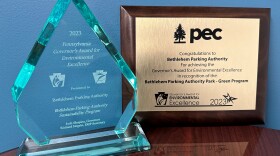
The Governor’s Award for Environmental Excellence is open to any commonwealth business, farm, government agency, educational institution or nonprofit organization that has developed or participated in a project that promotes environmental protection and stewardship. Applications are due by Jan. 3.
-
When state officials announced a series of in-person and virtual meetings there were no in-person meetings slated for the Lehigh Valley, even though the region is the third largest metropolitan area in the commonwealth. A meeting in Allentown has been added to the schedule.
-
A decade or so after buying his South Whitehall Township home in the late 1960s, Fred Buse started recording the average temperature, precipitation type and amount, as well as any animal sightings in his backyard to study and track the health of the local environment.