
Bethlehem Live Weather Camera sponsored by St. Luke's University Health Network
-
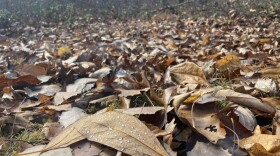
 Animals and insects use fallen leaves to live or find food — including birds and butterflies. Often, if leaves aren't composted, they end up in landfills. Here are some alternative ideas.
 -
The Lehigh Valley will join a large swath of the country in sharing frost and freeze headlines this week as temperatures fall into the 20s for the first time this season.
-
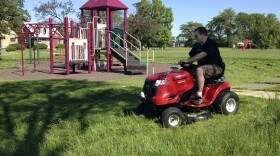
PennEnvironment on Monday released a new report, “Lawn Care Goes Electric," ranking emissions from gas-powered lawn and garden equipment by state and county across the U.S. Here's where Lehigh and Northampton counties ranked.
-
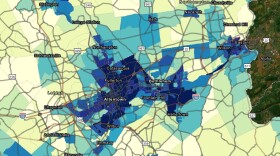
The U.S. Climate Vulnerability Index was launched on Oct. 2 through a partnership between the Environmental Defense Fund and Texas A&M University. Here's where the Lehigh Valley ranks.
-
Brad Klein reviews the week's astronomical highlights with Bethlehem’s "Backyard Astronomy Guy."
-
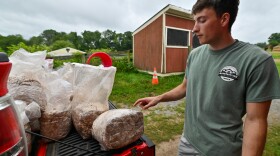
Pennsylvania is the biggest commercial producer of mushrooms in the United States. Foraging groups are popping up to find the fungus in the wild, while small farms are focusing on growing unique mushrooms.
-
Take a look at stories that ran throughout the week of which we are most proud, had a profound impact on readers or that you might want to look at again.
-
WLVR's Megan Frank talks with reporters Molly Bilinski and Stephanie Sigafoos.
-
The Lehigh Valley was among six climate sites in the region that either tied or established record-high temperatures Thursday, but we'll flip the script in a big way next week.
-
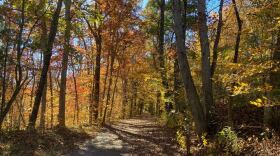
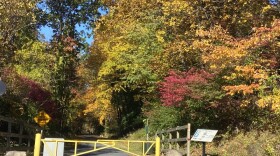
The commonwealth’s fifth fall foliage report was released Thursday. Here's the forecast for the coming week in Lehigh and Northampton counties.






-
The coldest air of the season thus far is arriving in the Lehigh Valley, with forecasters touting conditions favorable for snow showers and squalls this afternoon.
-
Starting this month, and running on select Thursdays through March, this year’s series includes officials from state and local agencies, as well as nonprofits. It's free for members and costs $5 for non-members.
-
Brad Klein reviews the week’s astronomical highlights with Bethlehem’s 'Backyard Astronomy Guy," Marty McGuire.
-
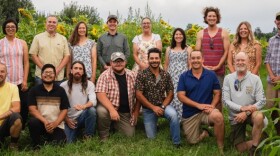
Less than a decade old and with trainees coming from all over the country, Rodale Institute’s Veteran Farmer Training program aims to give veterans the tools they need to pivot into successful farming careers, as well as spread knowledge about sustainable farming practices and regenerative organic agriculture.
-
Take a look at stories that ran throughout the week of which we are most proud, had a profound impact on readers or that you might want to look at again.
-
Two professors were recently awarded a three-year, $750,000 grant from NASA to help engage and retain women in STEM, or science, technology, engineering and math, disciplines. The college was one of seven institutions to get funding.
-
Hunters Sharing the Harvest, Pennsylvania’s venison donation program, has since 1991 built a network of deer processors and food pantries across the state, donating nearly 2 million pounds of venison. Deer rifle season begins Saturday.
-
Widespread heavy rains moved out of the Lehigh Valley early Wednesday, with the storm expected to bring a wintry mix across New England and the interior Northeast on the day before Thanksgiving.
-
Lehigh Valley Zoo will welcome red pandas in 2024 as part of its effort to introduce new species to the zoo.
-
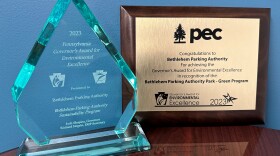
The Governor’s Award for Environmental Excellence is open to any commonwealth business, farm, government agency, educational institution or nonprofit organization that has developed or participated in a project that promotes environmental protection and stewardship. Applications are due by Jan. 3.
-
When state officials announced a series of in-person and virtual meetings there were no in-person meetings slated for the Lehigh Valley, even though the region is the third largest metropolitan area in the commonwealth. A meeting in Allentown has been added to the schedule.
-
A decade or so after buying his South Whitehall Township home in the late 1960s, Fred Buse started recording the average temperature, precipitation type and amount, as well as any animal sightings in his backyard to study and track the health of the local environment.